
Most leaders don’t need another to-do list.
They need a “stop-doing” list.
Marshall Goldsmith said it best in What Got You Here Won’t Get You There:
Your biggest improvements won’t come from adding new habits… they’ll come from stopping the ones that are holding you back.
And that’s true now more than ever.
Leaders Are Drowning in Good Intentions
Most leaders are overwhelmed not because they aren’t talented, but because they’re trying to be everything to everyone. They’re multitasking, overcommitting, sitting in meetings with no purpose, and reacting to whatever pops up next.
They don’t lack effort or drive - they are working long hours trying to get it all done.
Instead, it seems little to nothing has been accomplished at the end of long days. They take work home with them. It’s hard to unwind and stop thinking about everything that’s not done.
Consequences pile up fast.
Your Team Feels It, and So Do You
When leaders don’t stop the behaviors that drain their time and attention, two things happen:
1. Teams struggle to survive the workload.
They get mixed signals, rework, unclear priorities, last-minute fire drills, and a leader who’s physically present but mentally elsewhere.
Leadership trust starts to diminish.
2. Leaders slip into reactive mode.
No time to think. No space to coach. No focused time for planning.
Your life becomes inbox triage, meeting overload, and the sinking feeling that you’re always behind. Maybe you’re even wondering if you’re cut out to be a leader.
This is how high achievers burn out - and how good teams quietly disengage.
Leadership Is Tactical, Not an Innate Quality
Here’s the truth: These patterns are predictable. And they’re fixable.
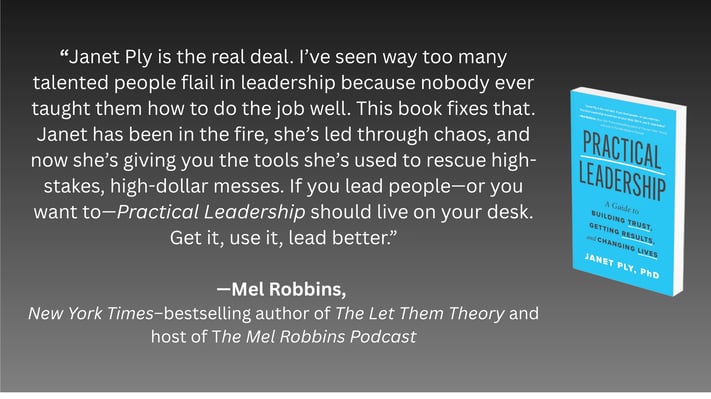
In Practical Leadership, I break down the tactical skills every leader needs that can be put into practice today, not someday.
Small changes done consistently over time are transformative.
Leadership isn’t an art form. It’s a craft you learn and master, one clear behavior at a time.
And it starts with what you stop doing.
10 Things Leaders Should Stop Doing
Here is your leadership stop-doing list - the exact behaviors that derail well-intentioned leaders and drain teams:
1. Stop saying yes to everything. Protect your time so you can protect your team.
Overcommitment isn’t a leadership strategy. When you say yes to everything, you drag your team into reactive chaos, frustration, and burnout.
2. Stop multitasking. You can’t lead well in fragments.
Presence is the foundation of effective leadership. If your attention is scattered, your leadership is too.
3. Stop sugarcoating or avoiding difficult conversations.
“Clear is kind, unclear is unkind,” as Bréne Brown says. You lose so much credibility as a leader when you don’t deal with difficult conversations. Everyone knows it exists and is quietly observing how you handle it.
4. Stop assuming silence means agreement.
Silence often signals hesitation or uncertainty - almost never alignment or agreement. Healthy teams challenge, question, and clarify.
5. Stop talking first.
When you always start the conversation, you’re telling others their ideas don’t matter. And you’re training them that they don’t need to think. Let others go first. More often than not, people closer to the work have better ideas and solutions than yours. I’ve learned this the hard way on more than one occasion.
6. Stop taking credit for team successes and achievements.
The best leaders know that it was a team effort to get results and the team should be recognized. These same leaders take the blame when things go wrong instead of throwing their team under the bus.
7. Stop relying on email to resolve conflict.
If emotions are involved, talk it out - talk, don’t type. Email is a terrible conflict-resolution tool on so many levels.
8. Stop holding meetings without a clear purpose or outcome.
A meeting without direction is just calendar clutter. Clarity saves time, energy, and patience.
9. Stop using one-on-ones as status meetings.
Status belongs in dashboards and in status meetings. One-on-ones are where you connect with your team members, learn about their goals and aspirations, and help them develop their potential.
10. Stop delegating only the tasks you don’t like.
Delegation shouldn’t be about dumping tasks on someone. Use delegation to help people grow. Give team members stretch work, not just the work you don’t want to do.
Next Steps to Take Right Now
If these stop-doing behaviors hit a nerve, that’s a good sign.
It means you’re self-aware and paying attention to the right things - the ones that actually move the needle.
If you want the full tactical playbook for building these habits (and dropping the ones holding you back), grab your copy of Practical Leadership.
And if you lead a team or organization, consider buying copies for your leaders.
Because everyone deserves to work for a great leader.
Warm regards,
Janet Ply, PhD
Author, Practical Leadership
www.janetply.com
Schedule a free problem-solving call with me at janetply.me. Connect with me on LinkedIn.